






Episode 6 | Wellness and Wonder Takes HCD!
In this special episode of Wellness & Wonder, producer Emma Hierholzer recaps key insights from last fall's Healthcare Design Conference (HCD), exploring emerging trends in behavioral health design, neuro-inclusive spaces, caregiver wellness, and innovative healthcare furniture shaping the future of clinical environments.


After a brief hiatus, Wellness & Wonder returns with a different kind of episode - one that trades our recording studio for the show floor!
In October 2025, our producer, Emma Hierholzer, attended the Healthcare Design Conference (HCD) in Kansas City, capturing conversations with architects, product innovators, strategists, and manufacturers shaping the next chapter of healthcare environments. This episode offers a ground-level view of where healthcare design is headed in 2026 - and what it means for wellness across patient, caregiver, and clinical spaces.
The themes were clear. Clinical is softening. Behavioral health is gaining urgency. Neuro-inclusivity is becoming standard practice -- not a specialty. And product design is doing more heavy lifting than ever before.
“If your belongings have a place, then you feel like you belong.” — Stephen Parker, Architect and Mental & Behavioral Health Planner, Stantec
1. Making Clinical Spaces Feel Less Clinical
Across nearly every conversation, one idea surfaced repeatedly: healthcare environments no longer need to feel institutional to function at a high clinical level.
Manufacturers are investing in solutions that balance durability, infection control, and behavioral safety with aesthetics that feel modern, tactile, and human.
- Futrus Solutions emphasized prefabricated solid surface fixtures designed for durability and sustainability—without the industrial feel often associated with healthcare.
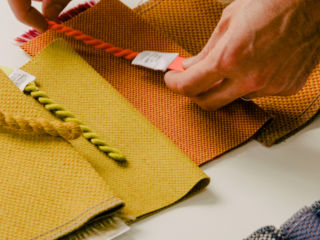
- Spec Furniture highlighted customization and color flexibility, reinforcing that healthcare spaces can embrace playfulness and personality without compromising performance.
- The broader industry shift is clear: sterile does not have to mean stark.
2. Behavioral Health: Dignity by Design
Behavioral and mental health design was not a side conversation - it was central.
Stephen Parker of Stantec shared insights from designing behavioral health facilities, including his development of recessed, ligature-resistant storage solutions for NORIX that meet safety requirements while preserving dignity
That small but powerful shift (from risk mitigation alone to dignity-centered design) signals a maturation in the field. Safety remains critical, but recovery-driven environments require autonomy, sensory agency, and respect.
3. Neuro-inclusivity and Sensory Agency
Another dominant theme: sensory-enabled architecture.
From autism-certified private booths to conversations about lighting control and acoustic management, designers are increasingly asking:
How can spaces give individuals control over their sensory experience?
At HCD, Room (a sister brand of OFS/Carolina) previewed a modular healthcare booth designed for privacy, telehealth, and respite -complete with cleanable surfaces and fresh air circulation. Notably, the product received autism resource certification, reinforcing the move toward neurodiverse-centered design.
The broader implication extends beyond healthcare:
- Sensory control is not a luxury.
- It is foundational to emotional regulation.
- It benefits patients, caregivers, and administrative staff alike.
4. Caregiver Wellness Is Design Strategy
Retention and burnout remain urgent realities across healthcare systems. That urgency is reshaping how environments are conceived.
Shelbye Maynard, Clinical Strategist at MillerKnoll and a nurse with 35 years of experience, emphasized that supporting caregivers requires more than break rooms. It requires:
- Acoustic control
- Soft edges and calming forms
- Spaces for mental reset
- Intentional separation from high-intensity clinical zones
When environments support nurses and physicians, outcomes improve across the board. The art and science of healthcare design must work together to sustain those delivering care!
5. Innovation at the Material Level
Some of the most compelling innovation appeared in the details.
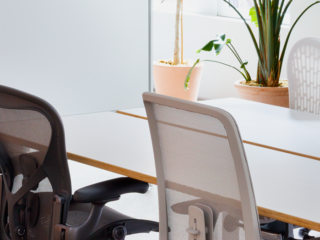
Via Seating introduced a patented copper-infused, self-sanitizing mesh designed to reduce bacterial survival without relying solely on chemical cleaning agents. The product addresses infection control while maintaining airflow and ergonomic comfort - particularly important for caregivers who move constantly throughout shifts.
The takeaway: performance innovation is becoming increasingly invisible - but increasingly impactful.
Materials are working harder behind the scenes to:
- Reduce infection risk
- Encourage movement
- Support ergonomic posture
- Extend product lifespan
6. Hospitality Influence and the Softening of Healthcare
One subtle but pervasive shift: the merging of hospitality and healthcare aesthetics.
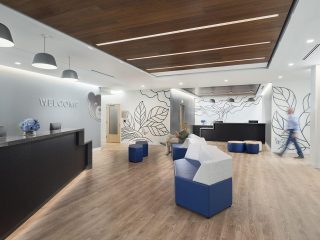
Designers and manufacturers alike referenced the desire to move away from the “astringent clinical” feel. Post-pandemic, expectations have changed. Patients and staff alike seek warmth, texture, and a residential sensibility.
Healthcare spaces are evolving into environments that feel:
- Inviting
- Human-centered
- Visually and tactilely comforting
What Does This Mean for 2026?
The 2025 Healthcare Design Conference made one thing clear: wellness in healthcare environments is no longer conceptual. It is productized, engineered, certified, and operationalized.
We are seeing:
- Behavioral health treated with architectural seriousness
- Neurodiversity embedded in product standards
- Caregiver wellness influencing spatial planning
- Infection control integrated at the material level
- Clinical spaces embracing color, softness, and play